
Saturday, August 11, 2012

Motorcycle Boots For Sale
I'm trying to sell a pair of boots,
slightly worn. I've had them about a year and a half, but they're
barely broken in.
These boots are the Combat Lite Touring
boots sold by Aerostitch/Rider Wearhouse. Here's a link to the
catalog entry on their website:
http://www.aerostich.com/clothing/footwear/combat-touring-boots/aerostich-combat-lite-boots.html
Check them out, and read the
user/customer reviews.
You can see from the site that these
boots are priced at $297.00. They're made of very thick, sturdy
leather, using as few pieces as possible to limit the amount of
stitching required. This results in a sturdier boot, since the
stitching would be the structural weak point. The few seams and thick
leather combine to make these boots very water resistant. Aerostitch
makes no claims that they're water proof,
but if you read through the customer reviews, you'll see that with a
little oil or other leather treatment, they become waterproof. In my
limited experience, I'll agree that they are very sturdy, and
definitely water resistant. I haven't had occasion to wear them in
anything more than a light shower, but my feet stayed completely dry.
I'm
selling these boots because they're just too much boot for my needs.
They're fairly heavy, they're stiff, and they chafe my heel. Part of
the reason for this is that I have issues with finding footwear that
fits me properly in the first place – heel slippage is common. So I
wouldn't hold it against the boot. Also, my riding is done on
streets, highways, and back roads. I commute by motorcycle, so I also
need to stand on a concrete floor for 8 – 10 hours a day. I was
attracted to the boots because of the water resistance. I used to
have “daily wear” boots, and a pair of waterproof touring boots
(that just weren't comfortable for daily wear), but I wore out the
waterproof ones, so I thought with these I'd get two in one. But
they're really designed for the adventure touring rider. Someone
who'll ride until the pavement stops, then ride cross country.
These
boots are excellent for the adventure rider. The thick leather will
protect from underbrush and rocks thrown up by the front tire. They
have speed laces (I had to replace the laces, because I trimmed them
too short, but this doesn't affect the "speed"), and a buckle on the outside at the ankle to keep them
securely on your feet. The water resistance part is nice, too. They
also have a nice wedge sole for traction.
There
is a little wear. You can see where folds/creases have formed from
being worn, which is of course perfectly normal for leather boots.
There are some scuffs on the toes, especially the shifter toe.
There's minimal wear on the soles.
The
boots are made by Sidi exclusively for Aerostitch, so you can't get
them anywhere else. They should last you years, maybe the rest of your life. Aerostitch sells
replacement laces, buckles and soles.
These
are labeled European size 43, but I've looked at more than one
conversion chart online, and there doesn't seem to be a lot
consistency in the conversions. Looking in the print catalog, I
probably ordered a size 9. I
just bought a pair of Red Wings work boots that are size 8 ½,
though, so there may be a problem with the conversion. My problem is that I tend to fall
between sizes, especially with shoes made in Europe or the UK. I had
a pair of Dr Martin's that never fit me exactly right, either.
I'm
asking $200.00, because really, these should last a lifetime. The
price includes shipping UPS. If you have a Post Office Box, we'll
negotiate from there. I'd rather not ship internationally, but if
you're willing to negotiate shipping costs, we can discuss it.
If
you're interested in the boots, contact me through this blog, and
we'll exchange email addresses and go from there.


Wednesday, August 1, 2012

Saturday, July 21, 2012
Dream On


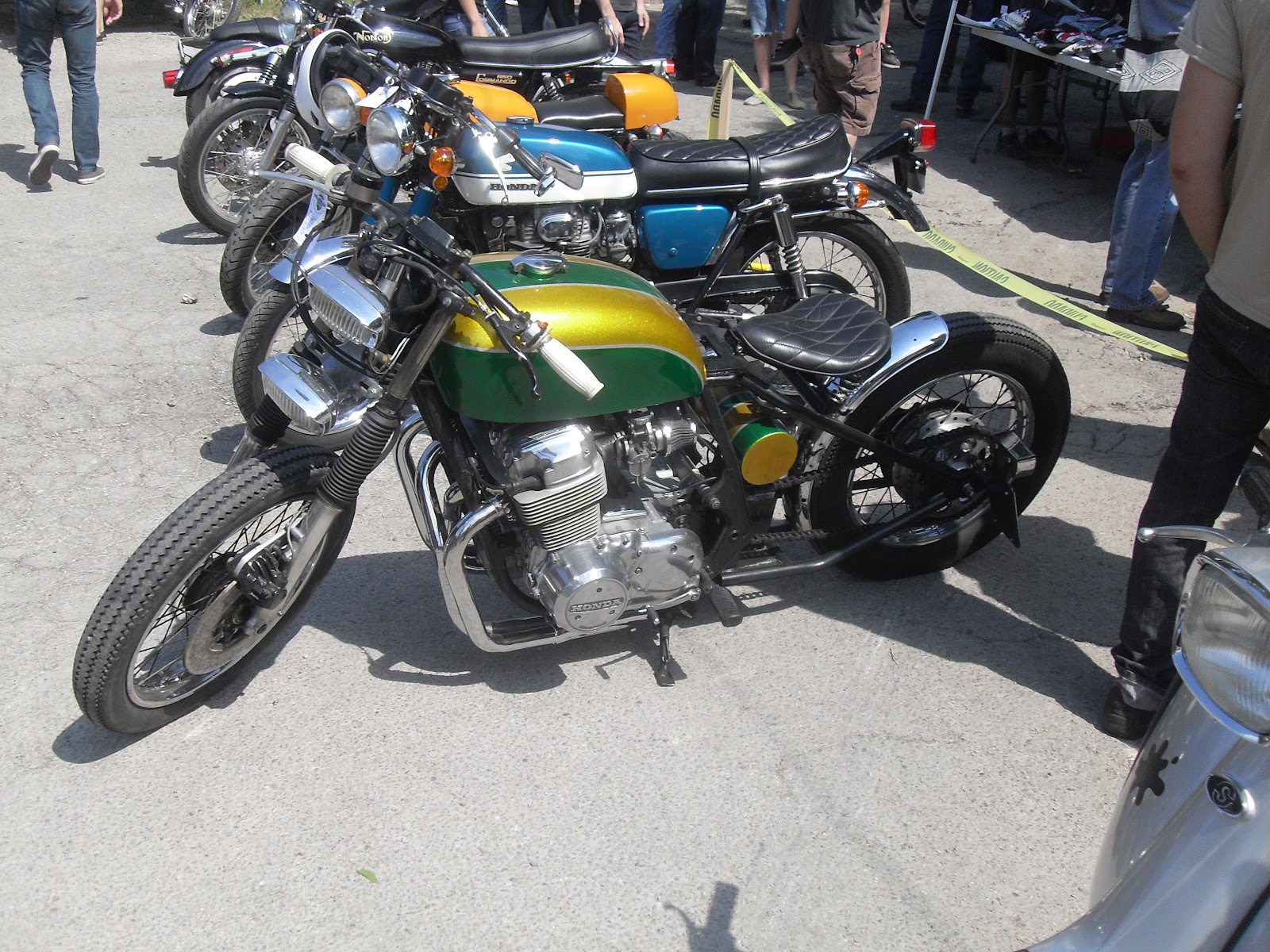
On a side note, the first ride I ever had was straddling the gas tank on my uncle's Honda Dream. I was too young to even remember it.
Tuesday, July 17, 2012


Sunday, July 15, 2012
Oily Hands, Soapy Hands
Here's a tip for those who do their own maintenance, but need to have clean hands for work. (For example, I spend all day unpacking and sorting books - no one wants to pay $28.99 for the latest Stephen King if it's got 10W40 smudges on it). Sometimes it seems like no matter how much and how hard you scrub your hands, there's still grease left on your finger tips and in the creases of your knuckles. I read something somewhere a while back, and now I'm sharing it with you after years of field testing. Before you go out to the garage or driveway, or wherever you're going to change your oil or strip down your carburetor, dump a couple of drops of liquid dish detergent in your hand, and rub it all over your hands and fingers, coating everywhere that's about to get dirty. Give it a few minutes to dry, and it's like a liquid glove.
When you're done with the work, use Go-Jo, Fast Orange, or whatever your preferred hand cleaner is, and you should be left with completely clean hands.
You can thank me later when you're waiting tables and don't gross out your customers.
When you're done with the work, use Go-Jo, Fast Orange, or whatever your preferred hand cleaner is, and you should be left with completely clean hands.
You can thank me later when you're waiting tables and don't gross out your customers.
Saturday, July 14, 2012
One Hot Motor
I saw a bike in the grocery store parking lot today. It looked
different, so I went to check it out. Small displacement vertical twin cruiser. From the styling, I'm guessing a Yammie, but I wouldn't say so under oath.
A few years old, but not exactly "classic" age - maybe five to ten years old, but all the logos and insignia lost to time, use and rust. I respect that.
I also respect modifying a bike to make it yours. Cosmetically. Structurally. Even modifying the engine is cool, if you know what you're doing.
But here's the problem.
There were two hoses leading down from the neck area of the frame, and they were capped off, with the metal pieces welded to the frame. There's only one reason I can think of for hoses like this to be routed up from the motor area to the neck region, then back down in front of the downtubes. A radiator. Now, there are good reasons to modify many parts of an engine, but I can't think of a single reason that makes it a good idea to remove a radiator from a motor designed to run with it, then use that motor in Central Texas in the summer.
WTF?
A few years old, but not exactly "classic" age - maybe five to ten years old, but all the logos and insignia lost to time, use and rust. I respect that.
I also respect modifying a bike to make it yours. Cosmetically. Structurally. Even modifying the engine is cool, if you know what you're doing.
But here's the problem.
There were two hoses leading down from the neck area of the frame, and they were capped off, with the metal pieces welded to the frame. There's only one reason I can think of for hoses like this to be routed up from the motor area to the neck region, then back down in front of the downtubes. A radiator. Now, there are good reasons to modify many parts of an engine, but I can't think of a single reason that makes it a good idea to remove a radiator from a motor designed to run with it, then use that motor in Central Texas in the summer.
WTF?
Subscribe to:
Posts (Atom)